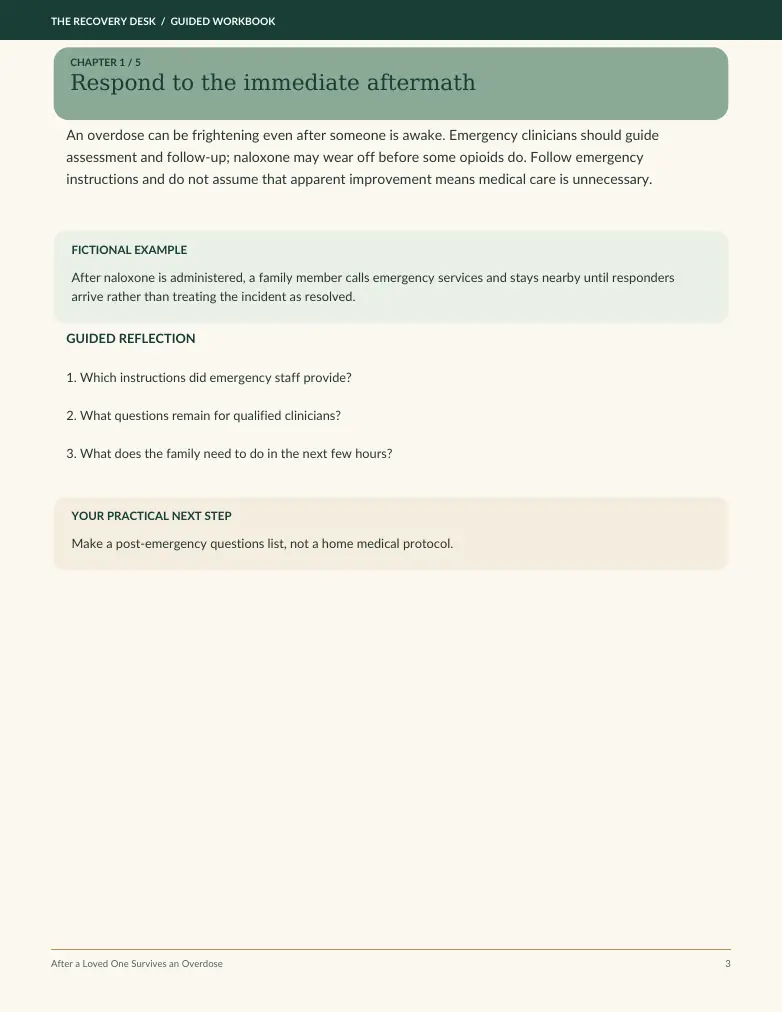
Respond to the immediate aftermath
A dedicated section with a realistic example, guided reflection, and a practical next step focused on respond to the immediate aftermath.
A practical family guide for the period after an emergency, with room for your own reactions.
The purchase button opens this exact product on Payhip for checkout and PDF delivery. Essential recovery and crisis resources remain free.
These pages come directly from the finished PDF. Select an image to see it larger, or use the sample link above to read the opening pages.
People who want a focused, choice-based resource they can use privately or bring into a conversation with a trusted support person.
A dedicated section with a realistic example, guided reflection, and a practical next step focused on respond to the immediate aftermath.
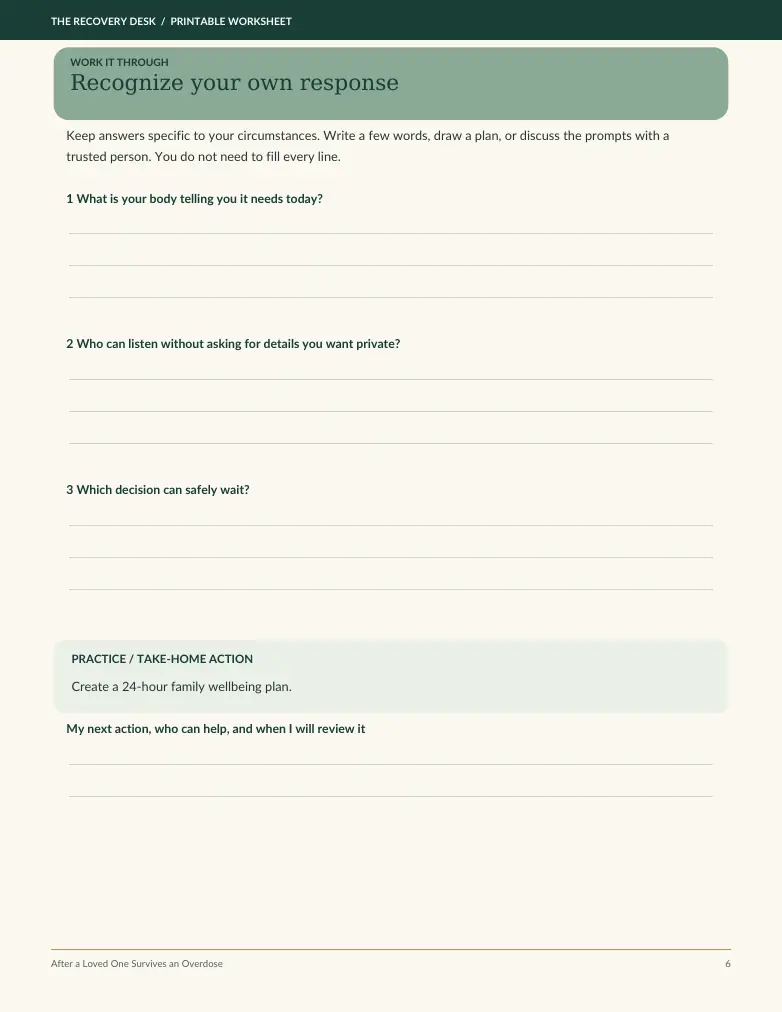
A dedicated section with a realistic example, guided reflection, and a practical next step focused on recognize your own response.
A dedicated section with a realistic example, guided reflection, and a practical next step focused on talk after the crisis without coercion.
A dedicated section with a realistic example, guided reflection, and a practical next step focused on prepare with qualified local supports.
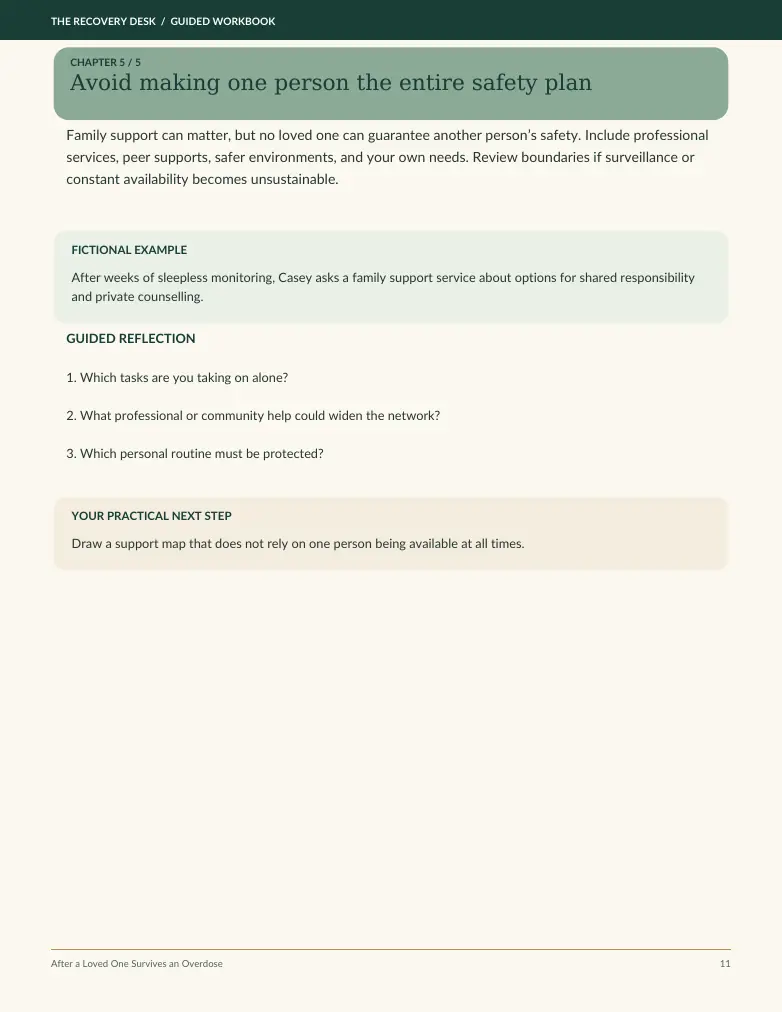
A dedicated section with a realistic example, guided reflection, and a practical next step focused on avoid making one person the entire safety plan.
Methods are connected to relevant SAMHSA, NIDA, WHO, Health Canada, and primary research sources inside the PDF.
The worksheets translate established recovery principles into practical reflection and planning. The full workbook itself has not been tested as a clinical intervention.
Readers are prompted to notice what changed, then keep, adapt, combine, replace, or bring a strategy into appropriate care.
No worksheet can guarantee abstinence, prevent every crisis, or replace medical, psychological, or substance-use treatment.
Readers can pause, skip questions, or complete pages with a trusted support. No disclosure is required.
Use completed pages to organize questions or discuss patterns with an appropriate counsellor, peer worker, prescriber, or treatment team.
The resource repeatedly directs urgent medical, overdose, suicide, and immediate safety concerns to professional, crisis, or emergency help.
The workbook supports reflection and planning. It does not diagnose, treat, replace care, or guarantee abstinence or safety.
Personal-use licence. The purchaser may print copies for their own use. The file may not be shared, posted, or resold.
No. It is general education and structured reflection. It is not a diagnosis, treatment plan, medical direction, emergency service, or replacement for professional care.
Yes. The PDF is designed for US Letter paper and can also be completed digitally using a PDF annotation app.
No. The licence follows the purchaser. The facilitator toolkit includes limited permission to print participant handouts for the purchaser's own direct groups or clients.
Do not wait for a worksheet. Call 911 for immediate danger or a medical emergency. In Canada, call or text 988 for suicide crisis support.